|
Even though the Winter Olympics have wrapped up, I wanted to share a behind-the-scenes moment I came across on Instagram. Mikaela Shiffrin, the most decorated American alpine skier in history, stood in front of a bathroom wall in her apartment in Cortina d'Ampezzo. The wall was covered in sticky notes. As she packed to head home, she peeled them off one by one, reading each before carefully saving it.
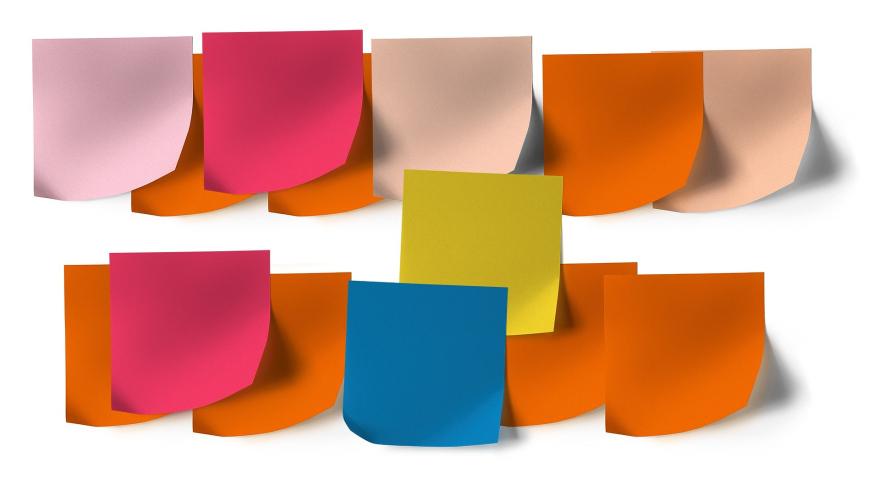
Yes, sticky notes. What did they say? They weren't motivational quotes she found on Pinterest. They were her own reminders.
One important note: at the 2022 Winter Olympics, Mikaela Shiffrin did not finish three events and told the press she felt like a joke. These notes reflect what she worked on between that moment and this one. Mikaela didn't just train her body. She trained her mind too.
I want to share them with you, because what Mikaela did was exactly what neuroscience points to again and again: your nervous system needs direction, not just encouragement. These notes did something more than motivate her. They gave her a pre-written script for hard moments, so her brain didn't have to generate language or find direction under pressure. And they moved her toward action rather than away from failure.
Before getting into the notes, it's important to highlight something she said. Mikaela Shiffrin pointed to two things: it's okay to doubt yourself, and it is okay to feel uncertainty. She wasn't trying to eliminate those feelings before competing, she was normalizing them so they couldn't hijack her.
Here are the notes.
1. “I want to feel the RACING energy, intensity, to push like hell out of the gate, and leave the rest behind."
Mikaela didn't write *I am calm*. She wasn't trying to silence her nervous system. She was inviting it to be activated. The goal was never to eliminate the feeling. It was to use it in her favor.
Your nervous system is doing its job when it activates before something hard and meaningful. The question isn't how to make it stop.
What would change if you stopped trying to calm down and started asking: how can I use this energy?
2. “You have the ability. Go and EARN what you want."
Feel the energy? There's no waiting. No hoping the conditions are ideal.
When we believe our actions shape outcomes, we stop waiting for the stars to align and we start moving. Mikaela wasn't asking the mountain to cooperate. She was taking the run. She closes the gap between belief and forward movement in a single sentence. You’ve heard this before, belief without action is a daydream.
What's something you want that you've been waiting for the right timing to pursue?
3. “I am loved, and this is going to be a great day. It's going to be so FUN to try!"
When your identity is tied to the outcome, every performance becomes a measure of your worth.
Mikaela reminded herself of something that had nothing to do with the skiing: “I am loved." When your core isn't shaken by results, you stop competing to prove. Notice she didn't stop at 'I am loved.' She added: it's going to be so fun to try. That's growth mindset! Joy isn't the reward at the end. It's part of the preparation. The brain pays attention to the words we use.
What are you telling yourself about a situation? Are you focusing on surviving it or having fun in the process?
4. "Certainties: I can rely on myself. My skills / training / instincts are there for me. I have developed over time and discipline. My skiing is there for me."
Notice she called them “certainties.” Not I am the best. Not I will win. Just: I can rely on myself.
This is not blind confidence. It's trust that was earned rep by rep, season after season. Your brain keeps score even when you don't. Every time you showed up, worked through difficulty, and kept going, it was keeping score. Mikaela reminded herself of what the record showed. The brain can't argue with evidence.
The brain also learns through repetition. When you've practiced something enough, it becomes automatic, almost wired into the body. Under pressure, we sometimes try to intentionally manage what should be running on autopilot. Mikaela was reminding herself: don't take over right now. The body knows what to do.
Preparation makes execution possible. The hardest part is trusting it.
Where are you waiting to feel ready instead of trusting what you've already built?
5. “Big energy. Steel yourself. GET TOUGH. Earn it with your skiing."
What a reframe!
Most of us experience anxiety and interpret it as a warning sign, something is wrong, I shouldn't feel this way. Mikaela did the opposite. She named the energy. She welcomed it. She told her brain: this is readiness.
Research on anxiety reappraisal shows that when we interpret that activation as readiness rather than threat, something shifts: we feel more capable, we approach rather than avoid, and yes, we perform better too. The physiology between anxiety and excitement is nearly identical, heart rate up, heightened alertness, body activated. The difference is the story you tell about it.
What's one situation where you could choose to read the nerves as fuel instead of a warning?
6. “What we focus on grows. My intention is on the start → gates → finish. I WANT that. I want to honor the turns."
Your nervous system is not designed to process everything at once. It focuses on what it's told matters. Mikaela gave hers a clear direction: start, gates, finish. Not the podium. Not the other athletes. Not what happened on the last run. That's a clear roadmap the brain can accept.
When you name your focus, you're not just being disciplined. You're helping your prefrontal cortex filter out what doesn't serve you right now. It strengthens the connection between your intention and your action.
What are one to three things you can control in the next hour? That's your "start → gates → finish."
7. “My task is to do the doing of what I know I can do."
When we focus on outcomes, the gold medal, the client's reaction, the grade, our brain carries two mental loads at once: doing the thing, and evaluating how it's going in real time. That's less working memory available for what's actually in front of us.
Notice that she added: *what I know I can do*. That's self-compassion. Mikaela wasn't demanding perfection from herself. She was asking herself to execute what she already knew. No more, no less. She kept bringing herself back to the task. Not gold. Not headlines. Just: one edge, one turn.
The result comes from the action, and the action deserves your full presence.
Where are you so focused on the outcome that you're missing the doing?
Please notice...
Mikaela's sticky notes didn't remove the pressure, they didn't eliminate emotion, they didn't guarantee the gold medal. They gave her nervous system something to work with when everything else felt like noise outside of her control.
That's what brain-informed preparation actually looks like. Not toxic positivity. Not mantras that bypass reality. But deliberate, specific language that speaks directly to how your brain processes threat, attention, and action. And if you use sticky notes as a visual to scatter around, even better.
Most of us are not training for the Olympics. And yet, this is exactly the kind of inner talk that shapes how we show up every single day.
So… what would your sticky notes say?
With gratitude, and admiration for Mikaela and the athletes who show us that real training also happens within,
Ana Isabel Sánchez
  
|