|
This month is Mental Health Awareness Month. When I sat down to write this newsletter, I went back through previous issues looking for a topic I had not already covered. At the same time, I was following the news and commentary about the Artemis II mission as the crew flew around the Moon. The phrase "moon joy" kept coming up to describe the crew’s contagious sense of wonder. Then, from a difference source, the legal well-being community announced this year’s Well-Being Week in Law theme: Tending Joy. Two different worlds landed on the same idea.
That was when the topic became clear: joy
Let's start by defining joy. Joy is not the same as happiness. Happiness tends to be cognitive, something you can cultivate through thought and reflection. Joy is more visceral, more enduring, and often rooted in connection to others. Researchers at Harvard have been making this distinction since at least 2011. Joy is a positive emotion that opens us up: it makes us more receptive, more present, more capable of connecting with what truly matters. The Institute for Well-Being in Law describes tending joy as equipping ourselves to face real challenges.
Let's explore joy as a mental health tool. 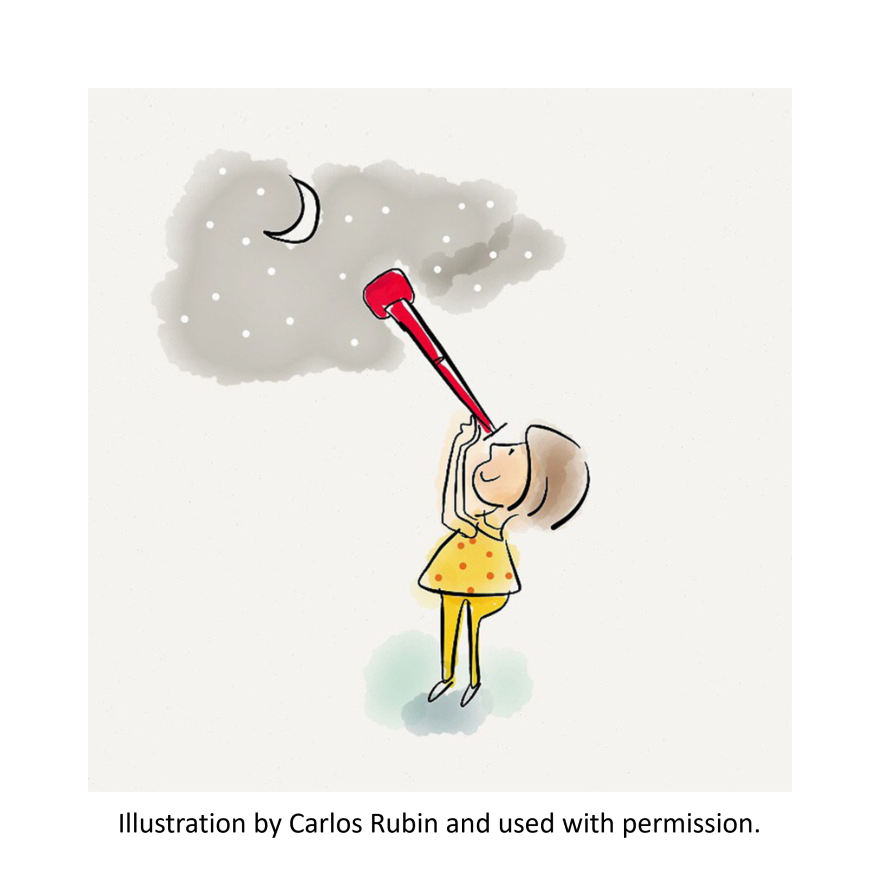 WHAT YOUR BRAIN KNOWS ABOUT JOY WHAT YOUR BRAIN KNOWS ABOUT JOY
Psychologist Barbara Fredrickson’s broaden-and-build theory is one of the clearest frameworks we have for understanding why joy matters beyond how it feels. Her research shows that positive emotions widen your thinking, strengthen problem-solving, deepen connection, and help the body recover more quickly from stress. They also build what Fredrickson calls durable personal resources: the internal reserves that carry you through harder moments.
Joy is not just a reward for good moments. It is a resource that helps us move through difficult ones.
THE ARTEMIS CREW AND THE JOY TRAIN
In April 2026, the Artemis II crew flew around the Moon. What captured people was not only the mission itself, but the crew's visible sense of wonder and joy.
After splashdown, astronaut Jeremy Hansen explained a concept the crew had been using for years during training. They called it the joy train. For Hansen, it was about the fulfillment that comes from meaningful contribution and real teamwork.
The idea is simple and deeply human. You are not always on the joy train. There will be days when the work is hard, the pressure is high, and your enthusiasm is nowhere to be found. That is not failure. That is reality. What matters is how quickly you return to what matters: the meaning behind the work, the people beside you, and the sense of wonder that is still available even when things are hard.
That is brain-informed thinking, even if they never called it that.
WHY JOY BELONGS IN THE MENTAL HEALTH CONVERSATION
Mental health is not only about managing what is hard. It is also about building what sustains us. Fredrickson’s research shows that positive emotions support resilience, strengthen connection, and expand our capacity to cope with stress.
This year’s Well-Being Week in Law theme, Tending Joy, invites us to build that practice: to look honestly at what restores us, energizes us, and reconnects us to why we do what we do.
The Artemis crew did not stumble into moon joy. They built it deliberately, through a shared commitment to getting back on the joy train whenever circumstances knocked them off.
WHEN JOY IS HARD TO FIND
When life is hard, looking for joy can feel like an added burden you cannot carry.
What neuroscience offers in those moments is not a shortcut. It is something more useful: you can change the lens. Researchers call this cognitive reappraisal. It means shifting how you interpret what is happening, not denying it, but choosing a different frame. When you do that, your brain's stress response begins to settle. Not because the hard thing disappeared, but because you are facing it differently.
You are not pretending. You are working with your brain instead of against it.
Returning to joy is often small and ordinary. It can be a five-minute walk between meetings, or even a good cry, which can help release built-up stress from the nervous system.
Tending joy sometimes looks like making room for it.
A REFLECTION TO SIT WITH THIS MONTH
At a press conference after the mission, Hansen shared that the crew was a mirror reflecting all of us. He said that if we liked what we saw in them, to look deeper inside, because that joy, that camaraderie, and that passion for contributing also live in us.
If you looked deeper inside today, what would you find?

With gratitude,
Ana Isabel Sánchez
  
|